Zum Hauptinhalt springen Zur Suche springen Zur Hauptnavigation springen

Liquid paint application with electrostatics

Electrostatic coating of surfaces has been state of the art for years. Highest surface quality and a particularly high application efficiency are the drivers of this technology. Although the initial costs for electrostatic coating are higher than for classic liquid coating, these costs are quickly amortized thanks to the many advantages.

What is electrostatics?

The sudden discharge of an arc of light during a thunderstorm, the brief „electric shock“ when getting out of the car, or dust deposits on electrical appliances: Charged particles are responsible for this. Equally charged particles repel each other and differently charged particles attract each other. The electric field determines the movement of charged particles. Within this field, the particles experience a force along the field lines depending on charge and field strength.

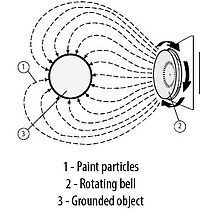
In electrostatic coating processes, the paint particles are charged with a negative voltage and the workpiece to be coated is grounded. This attracts the paint particles to the workpiece. The necessary voltage is generated with a high-voltage cascade in the electrostatic gun.

What are the requirements for successful electrostatic liquid coating?

Water-based paints are generally electrically conductive. Solvent-based coatings must have at least the minimum conductivity required to charge the material particles, which are then conducted toward the workpiece by the field lines of the high voltage. The material manufacturer should be contacted if there are any questions.

Application with electrostatics is most suitable for electrically conductive workpieces, especially those made of metal. The resistance of the workpiece should not exceed 1MΩ. Wood is also suitable if a certain residual moisture of at least 15% is present in the workpiece. In addition, non-conductive workpieces made of plastic or glass are also frequently coated with this technology. However, this requires special pretreatments. Under certain circumstances, it is sufficient to apply a conductive primer beforehand - as is the case, for example, with the coating of glass bottles - or to start coating directly at the grounding point so that the conductive coating, which is still liquid, creates a conductive connection to the grounding point. 

The greatest possible cleanliness, especially at the electrical connections and grounding lines, as well as at the tools, is a basic requirement for proper grounding and thus for the best possible electrostatic effect. Only in this way can as much material as possible reach the workpiece and the application efficiency be maximized. Any kind of deposits and residues can cause grounding interruptions or creepage distances that prevent the positive electrostatic effect.

More complex bodies with lattice structures or round shapes are particularly suitable for coating with electrostatics, since the coating material also reaches the rear side of the workpiece due to the wrap-around effect, resulting in the greatest material savings. The time required for coating per workpiece can be significantly reduced.

Which advantages does electrostatic liquid coating have?

WAGNER benefit icon

Wrap-around effect

The workpiece is also coated on the reverse side facing away from the spray jet. Due to the high application efficiency, the electrostatic process is therefore particularly economical and environmentally friendly.

The workpiece is also coated on the reverse side facing away from the spray jet. Due to the high application efficiency, the electrostatic process is therefore particularly economical and environmentally friendly.

WAGNER benefit icon

Fine atomization

In addition to conventional atomization, the repulsive forces ensure smaller droplets. Depending on the situation, electrostatics can be used to lower the material and air pressure even further, thus achieving smoother atomization with an even smaller droplet size.

In addition to conventional atomization, the repulsive forces ensure smaller droplets. Depending on the situation, electrostatics can be used to lower the material and air pressure even further, thus achieving smoother atomization with an even smaller droplet size.

WAGNER benefit icon

Uniform coating quality

The charged paint droplets travel along the field lines to the workpiece and strike it vertically and evenly distributed as they repel each other. This results in a high surface quality.

The charged paint droplets travel along the field lines to the workpiece and strike it vertically and evenly distributed as they repel each other. This results in a high surface quality.

WAGNER benefit icon

Optimum edge coating

By concentrating field lines at the corners and edges of a workpiece, undercoating at these points is avoided.

By concentrating field lines at the corners and edges of a workpiece, undercoating at these points is avoided.

Choosing the paint system: Solvent-based or water-based?

The choice of the paint system fundamentally determines the method of charging the paint and thus also the applicator and the entire coating system.

Solvent-based coatings
Solvent-based coatings are charged directly with an electrode positioned in the center of the spray jet and located directly in the gun. This is possible because solvent-based coatings have a comparatively high electrical resistance (i.e., low electrical conductivity) and the voltage is already dissipated within the applicator, so there is no danger to the user. If the conductivity is too high, there is a risk that too much current will flow to ground and the high voltage will drop sharply. In this case, the high voltage acts back into the material hose and can flash over to the outside. Special material
hoses that are high-voltage resistant and insulated enable these coatings to be processed with the identical technology.

Water-based coatings
The use of water-based coatings plays an increasingly important role in environmental protection. There are two different processes for this.

In the case of internal charging, the water-based paint is charged either in the applicator or in the paint container. Due to the high conductivity of the paint, the entire system - applicator, material hose, pump and paint container with accessories - is under high voltage and must be insulated accordingly for safety reasons. Charging with this method is carried out using a high-speed rotation atomizer. 

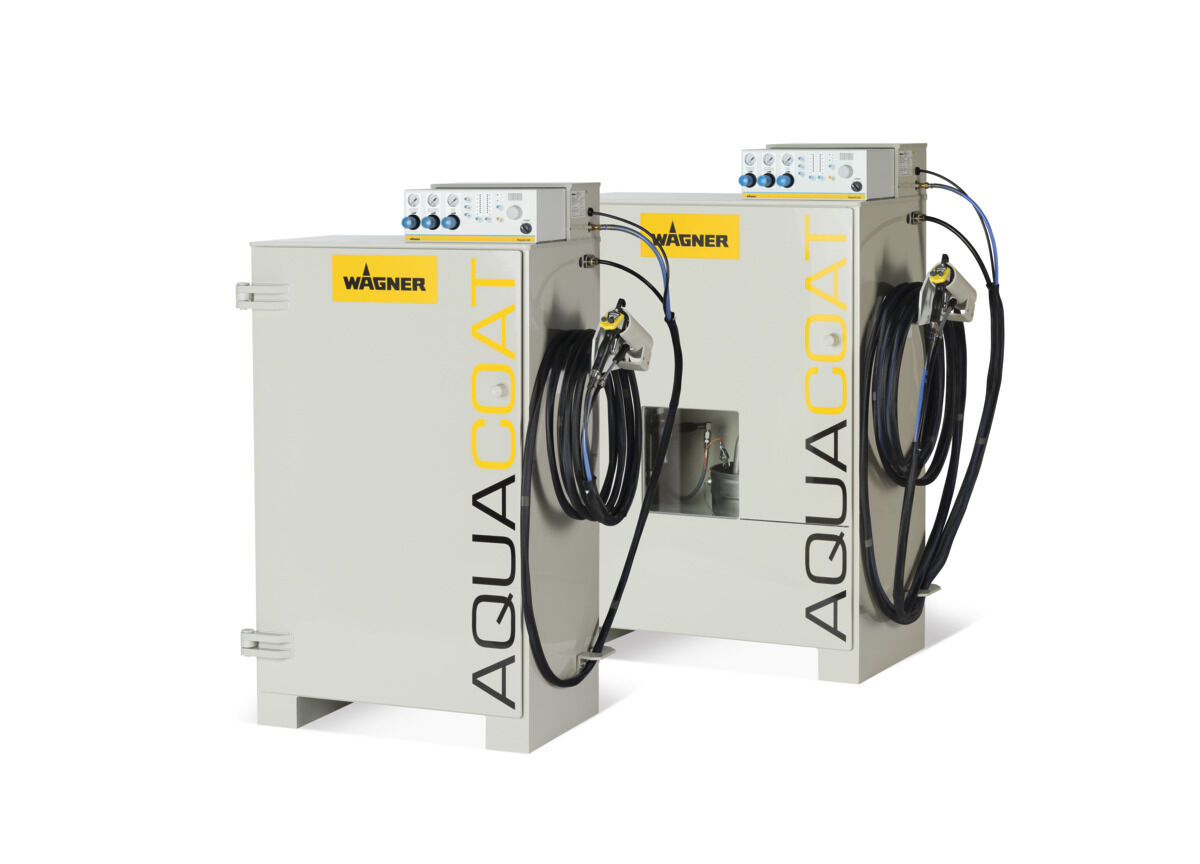
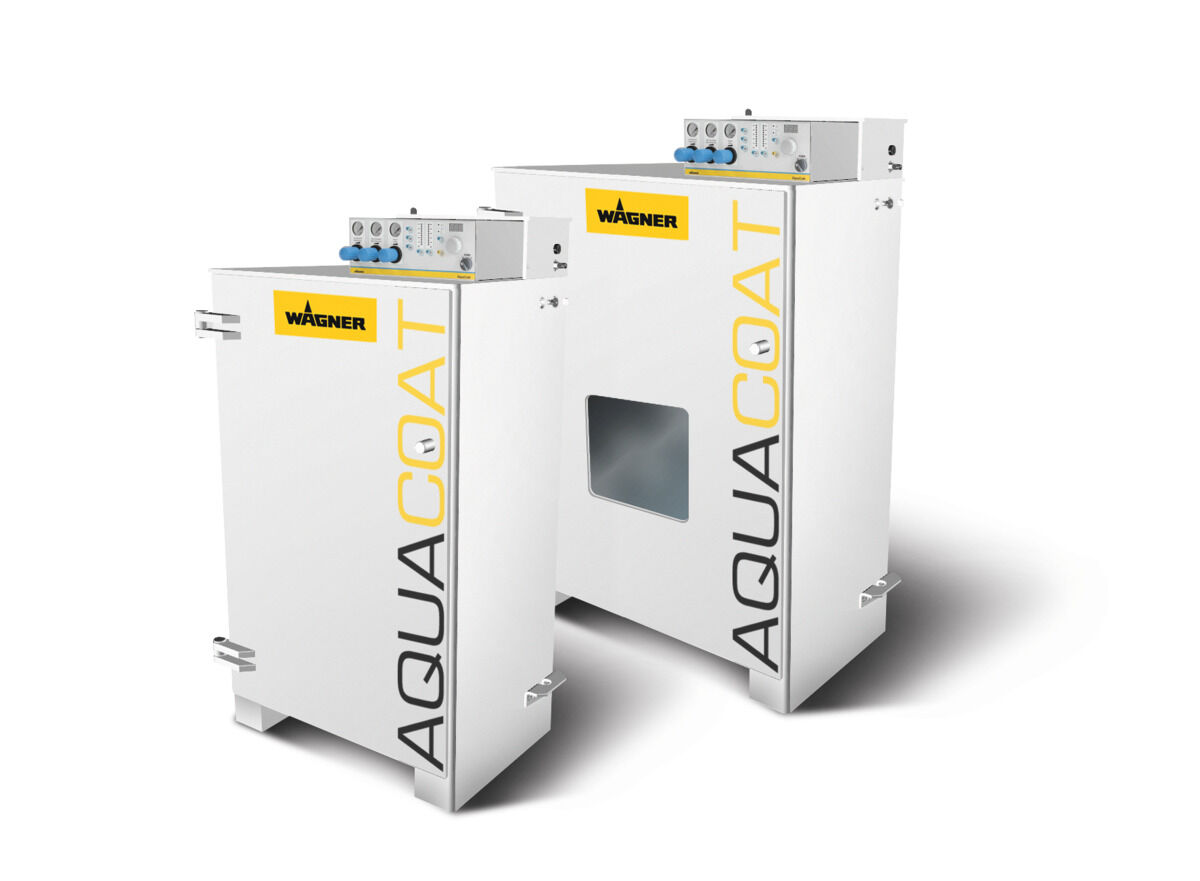
To isolate all components that come into contact with the material (such as material hoses, pumps and paint containers), the paint kitchen must be protected by a closed room or a grid. Alternatively, it is also possible to install it in a high-voltage-resistant cabinet (e.g. the AquaCoat 5010/5020). Access to the paint container is only possible when the system is completely discharged. The built-in safety system ensures that the painter never comes into contact with the high voltage.


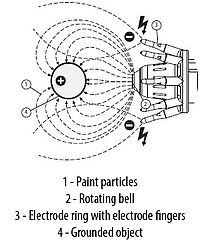
In external charging, due to its high conductivity, the water-based paint is charged using electrodes positioned outside the spray jet (Corona process). The high voltage emitted via the electrode ring ionizes the ambient air in such a way that the sprayed material is charged. This process is used in particular in high-speed rotation atomizers for applying water-based coatings in the automotive industry.

Here, the applicator is well insulated so that it is not live. The material savings are somewhat lower compared to coating with internal charging. However, the major advantage with external charging is that the user does not have to charge and insulate the entire coating system, including the paint kitchen, which significantly reduces the investment costs of the system.


What are the limits of electrostatic liquid coating?

Internal coatings, cup-shaped structures or cavities
Here, the Faraday effect prevents the penetration of field lines by completely shading the electric field. In such places, it needs to be possible to switch off the electrostatics (for a short time) in order to be able to coat these areas. Alternatively, comparatively high material and air pressure must be used.

Overcoating
Opportunity and risk at the same time. The field lines are concentrated at edges and corners, thereby ensuring reliable coverage, but can also quickly lead to overcoating (picture frame effect). At these points, it is recommended that the high voltage is reduced accordingly.

Application technologies in electrostatics

Electrostatic technology is used for airspray and AirCoat applications, as well as for high-speed rotation atomization. The process is not suitable for applications with a material pressure of more than 250 bar, because the relatively large droplets and the very high spray pressure generate high levels of kinetic energy, which sideline the electrostatic effect.

The key factor in creating a good electrostatic effect is the selected coating process and its settings. The lower the material and air pressure is set on the applicator, the better the electrostatic effect. The reason is simple: the kinetic energy of the paint droplets is superimposed on the attractive force in the electric field. So the smaller the droplet size and kinetic energy introduced, the less overspray is produced and the more wrap-around and uniformity of the coating is generated.

We are happy to advise you

Whether manual or automatic - we supply the right solution for highly efficient electrostatic liquid coating.

Contact us

Airspray
In the airspray process, the paint is atomized using compressed air. The paint droplets are electrostatically charged to achieve a more even coating and less overspray (compared to the airspray process without electrostatics). Airspray atomization in combination with electrostatics is used in many industrial applications as it produces a very high level of surface quality.

GM 5000EA

GM 5000EA

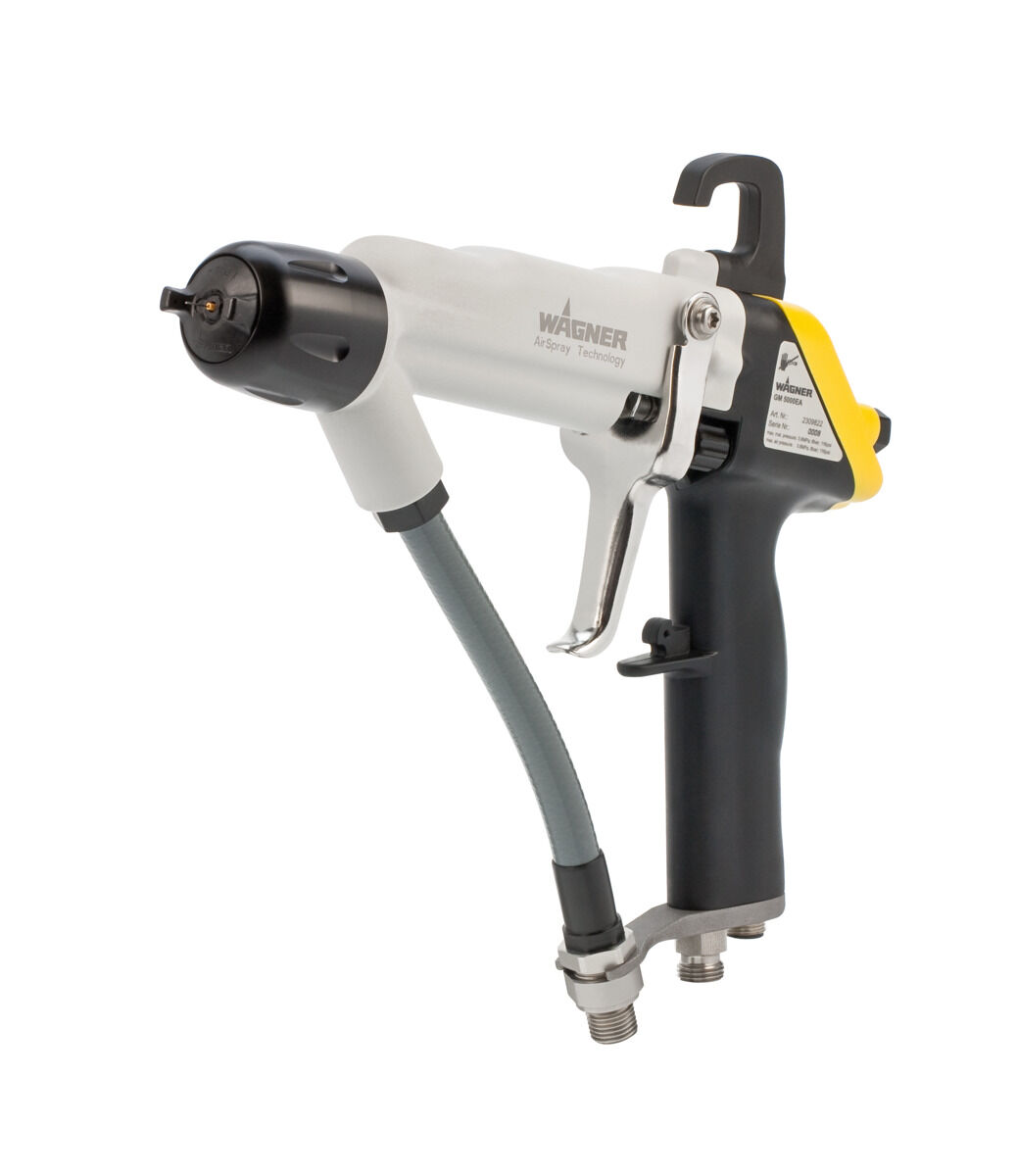
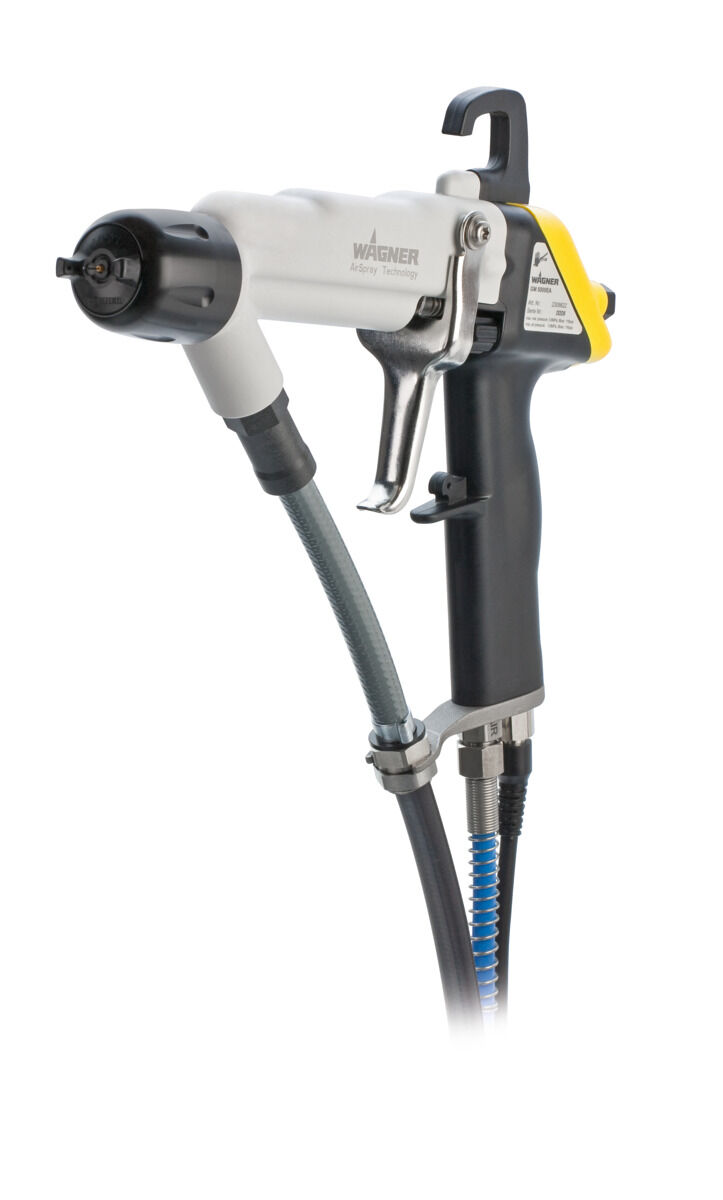
Electrostatic airspray manual gun

GM 5020EAW

GM 5020EAW

Electrostatic airspray manual gun for water-based paints

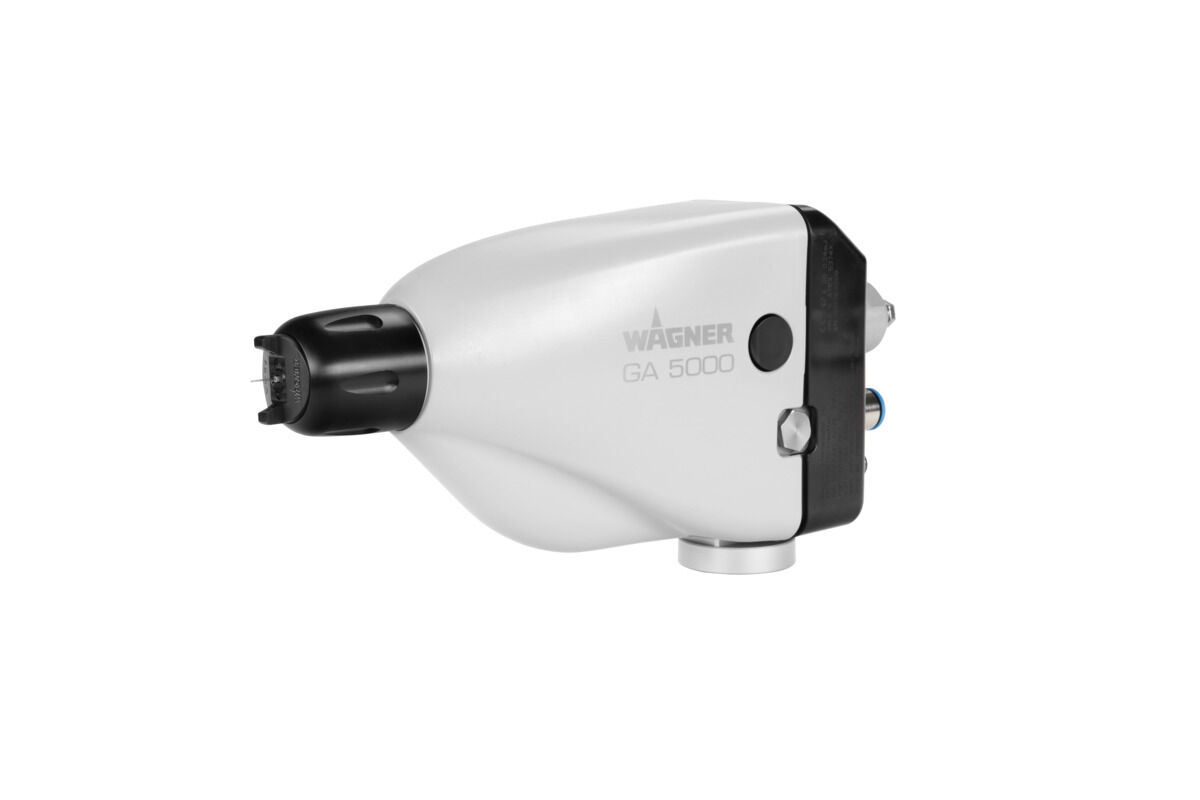
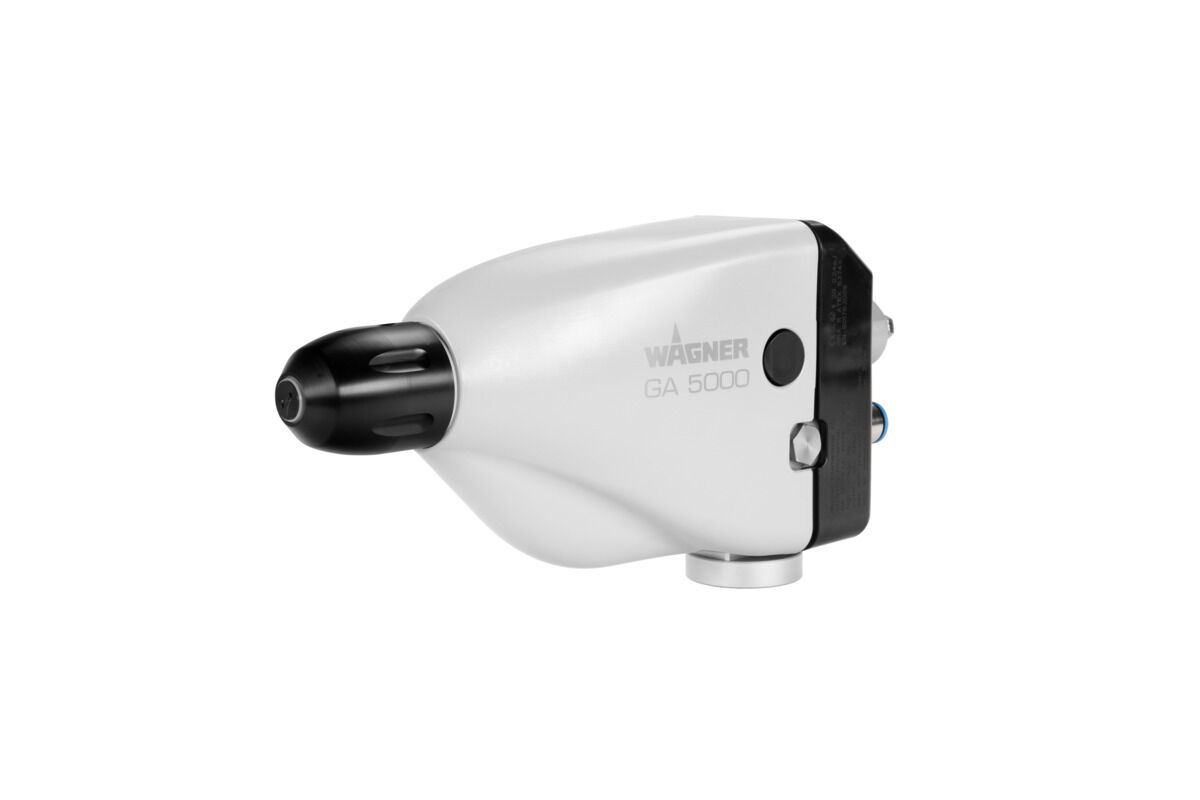
GA 5000EA

GA 5000EA

Electrostatic airspray automatic gun for solvent-based paints

GA 5000EAW

GA 5000EAW

Electrostatic airspray automatic gun for water-based paints

AquaCoat manual - basic devices

AquaCoat manual - basic devices

Coating system for electrostatic processing of water-based paints and separating agents

AquaCoat automatic - basic devices

AquaCoat automatic - basic devices

Coating system for electrostatic processing of water-based paints and separating agents

AirCoat
The AirCoat process combines hydraulic pressure and air support to atomize the paint. The advantages are a high working speed and low overspray combined with very good coating quality. The kinetic energy of the droplets is still low enough for electrostatics to be used.

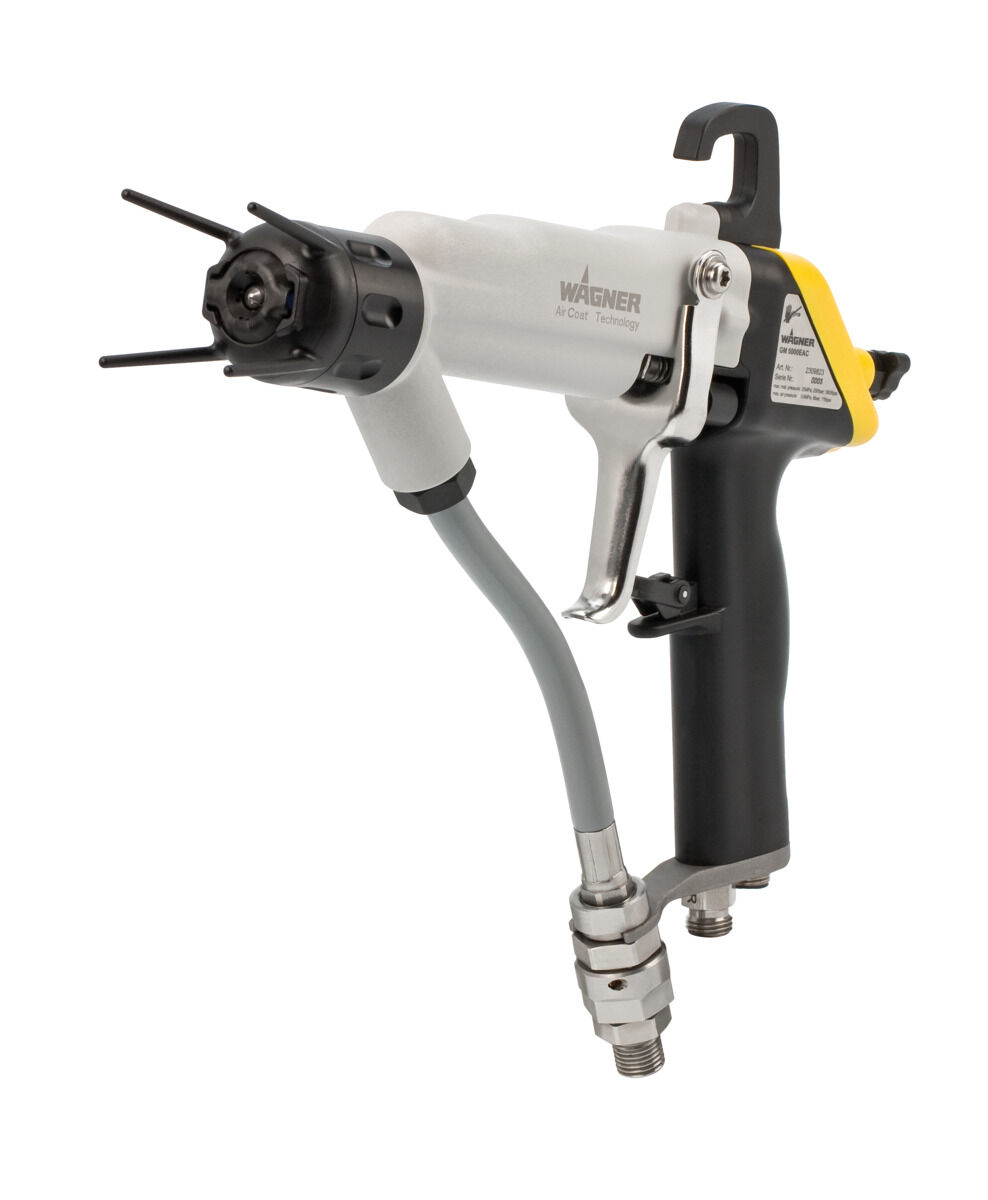
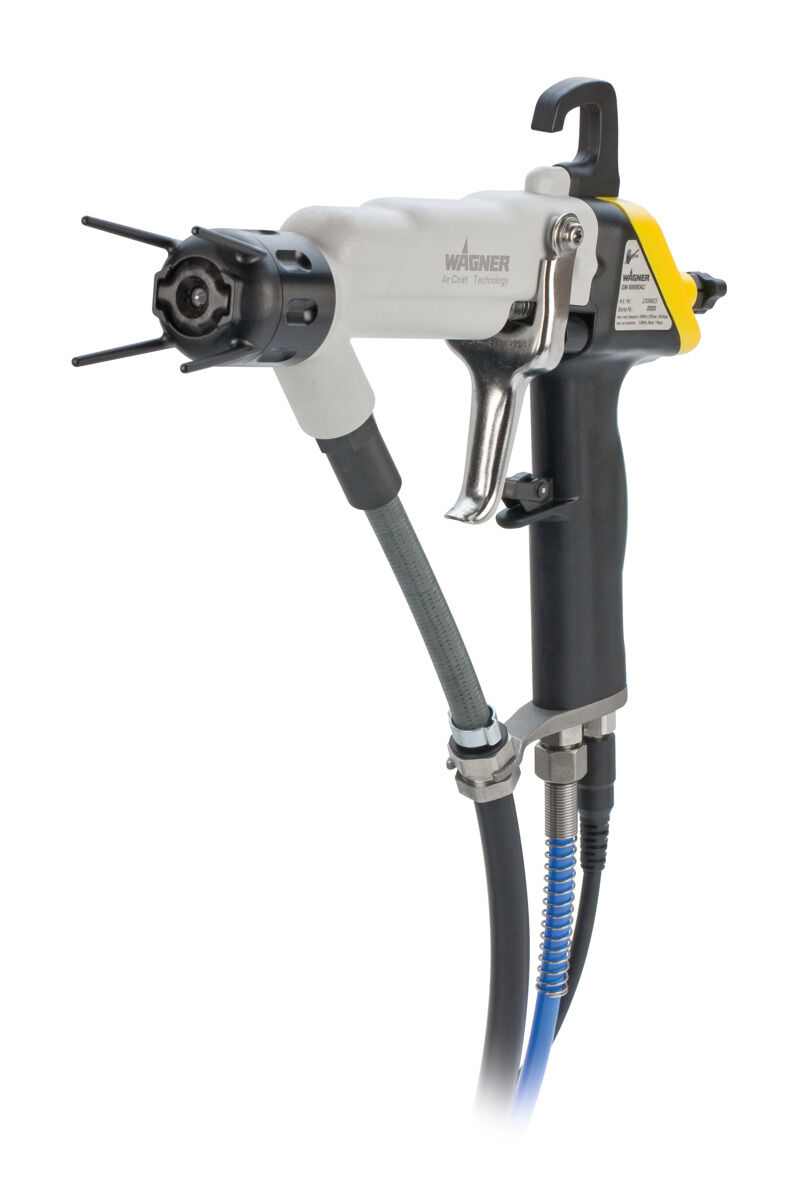
GM 5000EAC

GM 5000EAC

Electrostatic AirCoat manual gun

GM 5020EACW

GM 5020EACW

Electrostatic AirCoat manual gun for water-based paints

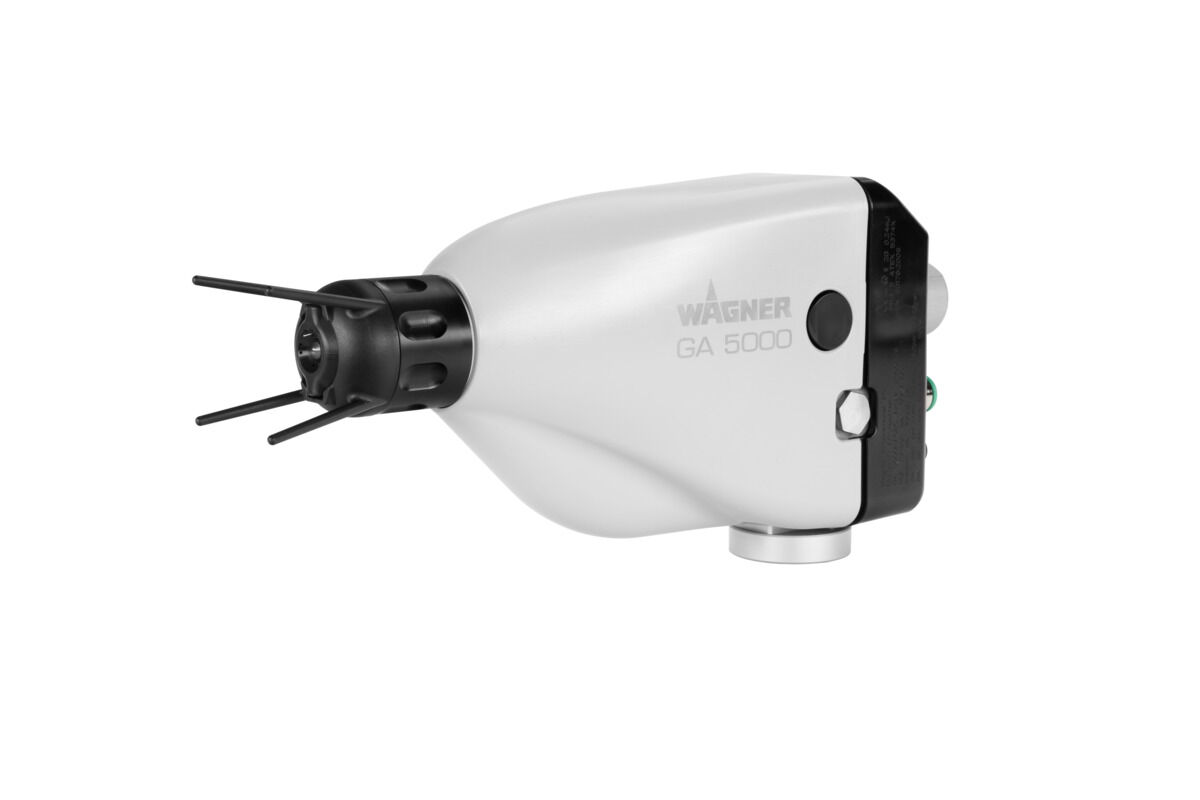
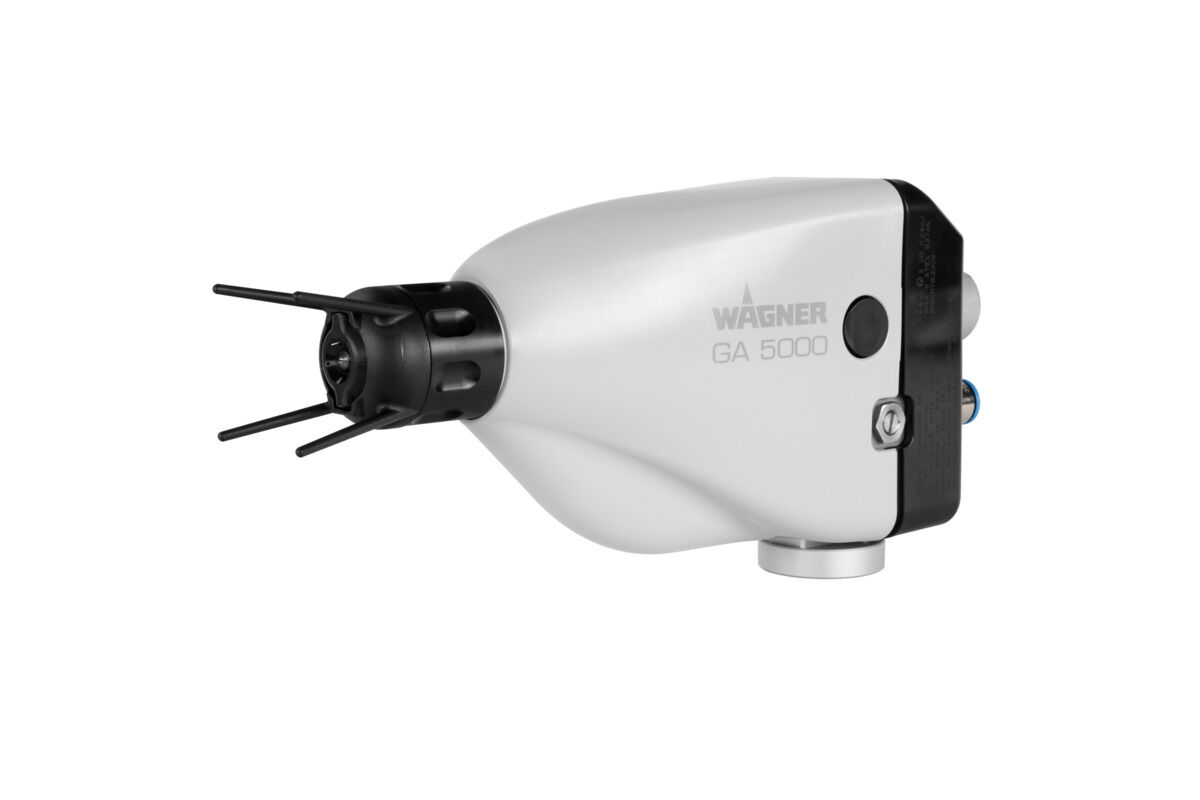
GA 5000EAC

GA 5000EAC

Electrostatic AirCoat automatic gun for solvent-based paints

GA 5000EACW

GA 5000EACW

Electrostatic AirCoat automatic gun for water-based paints

AquaCoat manual - basic devices

AquaCoat manual - basic devices

Coating system for electrostatic processing of water-based paints and separating agents

AquaCoat automatic - basic devices

AquaCoat automatic - basic devices

Coating system for electrostatic processing of water-based paints and separating agents

High-speed rotation
In the high-speed rotation process, the paint is atomized by a rotating bell. The electrostatic charge ensures that the paint droplets are evenly distributed over the surface, which increases material efficiency and surface quality.

TOPFINISH RobotBell 1/ Bell 1S ECH

TOPFINISH RobotBell 1/ Bell 1S ECH

High-speed rotation atomizer (external charge)

How do you choose the right process for electrostatic coating?

The lower the material and air pressure is set, the better the electrostatic effect will be. In practice, the material pressure is often set much higher than necessary. Then, of course, the air pressure must also be correspondingly high. As a result, the high kinetic energy and the resulting overspray prevent the paint droplets from being effectively attracted to the workpiece. Therefore, it is always better to increase the pressures slowly until the optimum atomization is achieved.

The smallest droplets are created by pure air atomization or high-speed rotation. The painting process is somewhat slower than with the AirCoat process, but the highest surface quality can be achieved. With the AirCoat process, the working speed is higher, but the electrostatic effect still achieves a very good surface quality.

The high-speed rotation process, which is primarily used in large series, is also increasingly becoming a very good alternative in general industries. It also produces a very fine atomization and a high degree of coating quality and material efficiency.

Whitepaper about electrostatics

We have summarized all information on electrostatic liquid coating for you in our whitepaper.

Download now

Practical examples with electrostatics

electrostatic automatic coating

Awila Anlagenbau GmbH

Uniform coating thicknesses and 30% material savings when coating silos.

Learn more
yellow coated workpieces

Hammelmann GmbH

Optimized paint processing at an international manufacturer of high-pressure technology.

Learn more
robot coating of hydraulic cylinders

KMF Kemptener Maschinenfabrik

Highly efficient, robot-based liquid coating of hydraulic cylinders.

Learn more
robot coating of automotive side mirrors

Motor Classic

Electrostatic priming of metal workpieces leads to significant paint savings.

Learn more
manual electrostatic coating of crane components

Tadano Ltd.

Electrostatic manual coating of complex crane components reduces paint consumption by around 20%.

Learn more
electrostatic liquid coating of glass bottles

Wiegand-Glas

High-speed rotation atomizer with external charging simplifies the coating process for glass bottles.

Learn more

More information

liquid coating pumps by wagner

Industrial liquid coating

Discover our components and solutions for the automatic and manual application of liquid coatings. Our focus is on reliability, durability and high surface quality.

Learn more
liquid coating practical training at the wagner academy

Liquid coating trainings at the WAGNER Academy

Choose the right liquid coating training course from our current training program. We can also put together a customized training course for you and your team - simply send us your request!

Learn more
service contact person at wagner

Service & consulting

We offer you a worldwide service and comprehensive consulting for your industrial liquid coating system. If you have any technical questions, you will find the right contact person here.

Learn more