Zum Hauptinhalt springen Zur Suche springen Zur Hauptnavigation springen

Build your own insect hotel: Simple assembly instructions from professionals

Hum, hum, hum ... soon happy bees will be buzzing around your garden too! 
Would you like to make a small but important contribution to local nature conservation and provide a safe home for wild bees and other insects? Then get to work with the drill, sprayer and co. Build a beautiful insect hotel yourself from wooden boxes and scraps. 

This is also a great project to realise together with children. As soon as the first inhabitants have moved into the insect hotel, you can observe the flying friends up close as a family. 

Read the following article to find out what you need for the DIY project, how to proceed and where the best location is in your garden.

What you need for your DIY insect hotel:

  • Cordless drill
  • Jigsaw
  • Table saw
  • Cordless screwdriver
  • Multi-sander
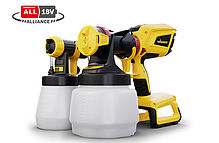
  • Battery paint spray system W 600 FLEXiO 18V from WAGNER
  • Cutter
  • Tacker
  • Hand sandpaper
  • For the basic frame you need (preferably old) wooden crates
  • Plank boards
  • Squared timber
  • Thin boards
  • Many screws
  • At will: Wood varnish, glaze or preservative
  • Wood colour
  • Roofing felt
  • Pithy plant stems
  • Interlocking tiles
  • Wood wool
  • Bricks
  • Seasoned wood with different diameters
  • Bamboo sticks
  • At least 2 Wooden trestles (so that you can easily saw your wood to size)
  • Safety goggles
  • Work gloves
  • Plastic gloves
  • Mouthguard
  • Large (plastic) tarpaulin to protect the surface when spraying paint
  • Wire
  • Cable ties

Step-by-step building instructions:

Step 1: Build a basic frame from wooden crates

Insektenhotel doin4

The basic structure for your insect hotel is made from (old) wooden crates. And if you have any leftover wood, you can also use it in this project. If not, get yourself some planks.

First cut a wooden board the same size as the base of the box and four square timber legs (approx. 10 cm high) so that the insect hotel does not stand directly on the ground. First screw the legs to the wooden board and then attach them to the crate. Then place the second crate on top and screw the two together. The basic structure is now complete.

Insektenhotel doin8

The basic structure for your insect hotel is made from (old) wooden crates. And if you have any leftover wood, you can also use it in this project. If not, get yourself some planks.

First cut a wooden board the same size as the base of the box and four square timber legs (approx. 10 cm high) so that the insect hotel does not stand directly on the ground. First screw the legs to the wooden board and then attach them to the crate. Then place the second crate on top and screw the two together. The basic structure is now complete.

Step 2: Finalising the roof construction

Insektenhotel doin9

Thin boards are used for the roof of the insect hotel. For the pointed roof, you need two boards that are adapted to the size of the crate and sawn to size. 
However, make sure that they protrude to the side and protect your structure and the bees from rain and snow. 

Fix the boards together on the gable and also with screws on the crate at each corner. Then sand all the edges smooth so that nobody can injure themselves. 

Step 3: Painting the insect hotel

Insektenhotel spraying

Once the basic framework is in place, colour comes into play. Paint application is particularly easy and efficient with the battery-powered paint spray system W 600 FLEXiO 18V from WAGNER. No long brushing, no time-consuming brush washing: simply pour your desired colour or wood stain into the device and apply slowly and evenly to the wood of the insect hotel.

Don't forget to cover the floor or substrate with a protective film beforehand to protect it. 

Step 4: Attach roofing felt

Insektenhotel doing15

The colour is evenly applied everywhere and has dried well? Now you can cut the roofing felt to size and attach it. First roll out the cardboard and cut it to the right size. 

Remember to add a little more on all sides so that you can staple the roofing felt to the wood. Attach them to the roof of the bee hotel with a stapler or nails. 

Step 5: Set up an insect hotel

Insektenhotel doing16

All the previous steps were compulsory, now comes the freestyle: the insect hotel is set up and made cosy for our buzzing friends. 

The first thing we need is filling material. Pithy, hollow stems of various plants are suitable for this. These are shortened to approximately the same length and then tied together with cable ties to form small bundles. 
Attach these to the two outer sides of the insect hotel. When cutting, make sure the edge is horizontal and clean so that the insects are not injured.

Step 6: Layering nesting material

Insektenhotel doing21

Now you can layer interlocking bricks in the various "rooms" of your bee hotel, which are particularly popular with bees. Seal the holes at the back with wood wool or bricks, as our little friends don't like draughts at all.

You can also make holes (3-8 mm diameter) in seasoned wood. Remove the bark to avoid harbouring predators and layer the pieces of wood like puzzle pieces in the insect hotel. Bamboo sticks can also be inserted into small holes. But first shorten to the correct length and sand down the edges. Against risk of injury.

Extratip: This is the right location for your insect hotel

Thank you for bee-ing a friend! 
What a splendid specimen your insect hotel has become. Bravo! 

Now you just need the right location for it. Choose a place that is protected from rain and wind if possible. 

A place that can be sunny but where the insects can nest undisturbed and feel at home. For example, between bushes or trees. 

W 600 18V product 01

Universal Sprayer W 600 FLEXiO 18V

You can now apply thick and thin materials quickly and with perfect coverage, without cables: The W 600 FLEXiO 18V cordless paint spraying system allows unlimited freedom of movement when carrying out small and large projects in the home and garden. 

Product
sandbox ambience5

Build your own sandpit

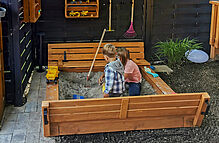
Are you looking for a new, functional sandpit that meets the needs of your family and the space in your garden? Then the DIY pros from the Saris Garage YouTube channel will show you how you can build and install a brand new sandpit yourself with a little skill, the right materials and the right tools.

Build your own sandpit
Why spray

Why spraying is better!

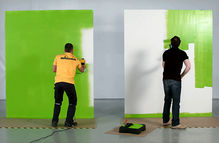
With a paint sprayer, it’s incredibly easy to apply the material evenly and to cover the entire surface. The end result is a smooth and even layer of paint.

Why it's better to spray