Zum Hauptinhalt springen Zur Suche springen Zur Hauptnavigation springen

Instructions: Table upcycling with the WAGNER W 690 FLEXiO

Are you fed up with the look of your dining table or do you still have an old table at home?

Then it's time to redesign your old table and give it a makeover! When upcycling furniture, a new color and decoration is often enough to beautify your table and adapt it to your individual furnishing style. There are no limits to your creativity. The WAGNER paint spray system gives your table the perfect color scheme in the shortest possible time. And who knows, maybe your old table will get many more visual changes in the future when you see how quickly and effortlessly your table gets a new design with the paint sprayer? One thing is for sure! It's definitely within your budget.

Upcycling is also a versatile trend that not only protects the environment, but also gives your home an individual touch. Instead of throwing away old tables or pieces of furniture, you can create unique and stylish furniture by upcycling. Steffi and Moni from @decorize_diy.homestyling.

Find out more about the benefits of table upcycling and take a look at some creative ideas for transforming your old second-hand furniture into new treasures.

What you need to upcycle your table:

  • Coloured paint When selecting, make sure that the paint is suitable for applying with an (HVLP) paint sprayer.
  • Roller cores
  • Polyhemp rope Premium synthetic sisal rope 8 mm
  • Covering material, e.g. Masking Kit Universal Extra Masking Kit Premium
  • Hot glue gun
  • Ruler
  • Pencil
  • Cutter knife

Step-by-step instructions for upcycling your table:

Step 1 of 8: Cutting roller cores to size

Step 1: Cutting roller cores to size

First measure the length of the table base so that you know the length to which you should cut the roller cores.
Then cut the roller cores to the desired size.

Step 1: Cutting roller cores to size

First measure the length of the table base so that you know the length to which you should cut the roller cores.
Then cut the roller cores to the desired size.

Step 1: Cutting roller cores to size

First measure the length of the table base so that you know the length to which you should cut the roller cores.
Then cut the roller cores to the desired size.

Step 2 of 8: Attaching the roller cores

Step 2: Attaching the roller cores

Attach the roller cores to the table legs using a hot glue gun.

Step 2: Attaching the roller cores

Attach the roller cores to the table legs using a hot glue gun.

Step 3 of 8: Attach hemp rope

Step 3: Attach hemp rope

Twist the hemp rope into a cord. In the next step, wrap the hemp rope around the roller cores. Attach the rope bit by bit with a hot glue gun until you have reached the end of the roller cores.

Step 3: Attach hemp rope

Twist the hemp rope into a cord. In the next step, wrap the hemp rope around the roller cores. Attach the rope bit by bit with a hot glue gun until you have reached the end of the roller cores.

Step 3: Attach hemp rope

Twist the hemp rope into a cord. In the next step, wrap the hemp rope around the roller cores. Attach the rope bit by bit with a hot glue gun until you have reached the end of the roller cores.

Step 4 of 8: Attach the hemp rope to the edge of the table

Step 4: Attach the hemp rope to the edge of the table

Now attach the hemp rope to the edge of the table. Attach the rope again with the glue from the hot glue gun and press the rope down lightly.

Step 5 of 8: Draw a geometric pattern

Step 5: Draw a geometric pattern

Draw a pattern of your choice on the tabletop and use adhesive tape to cover the drawings. The adhesive tape must be well secured so that no paint gets under it.

Step 5: Draw a geometric pattern

Draw a pattern of your choice on the tabletop and use adhesive tape to cover the drawings. The adhesive tape must be well secured so that no paint gets under it.

Step 5: Draw a geometric pattern

Draw a pattern of your choice on the tabletop and use adhesive tape to cover the drawings. The adhesive tape must be well secured so that no paint gets under it.

Step 5: Draw a geometric pattern

Draw a pattern of your choice on the tabletop and use adhesive tape to cover the drawings. The adhesive tape must be well secured so that no paint gets under it.

Step 6 of 8: Spray hemp rope / table base

Step 6: Spray hemp rope / table base

In the next step, spray the hemp rope with your desired color and make sure that the paint is applied evenly.

Step 7 of 8: Spraying the table top

Step 7: Spraying the table top

Also spray the table top with your desired varnish or glaze.

Step 8 of 8: Remove the adhesive tape

Step 8: Remove the adhesive tape

In the last step, carefully peel off the adhesive tape bit by bit.

Step 8: Remove the adhesive tape

In the last step, carefully peel off the adhesive tape bit by bit.

The result

Why table upcycling?

As with every upcycling project, the ecological aspect plays a decisive role.

By reusing old tables and giving them a new lease of life, you reduce the need for new resources and cut down on waste. This protects the environment and contributes to a more sustainable lifestyle.

In addition to being environmentally friendly, table upcycling also offers you an excellent opportunity to add a personal touch to your home. Each upcycling project is unique and reflects your creativity and individual style.

More creative ideas on how to spice up an old table

  • Coffee table: The old dining table is too big or simply no longer fits in the living room? No problem! Give it a new coat of paint and shorten the legs to transform it into a stylish coffee table. Whether modern, vintage or rustic - with the right color and decoration, it will match your interior perfectly and quickly become the new focal point in your living room.
     
  • Pinboard: Why not use the table top as a practical pinboard? With a little blackboard paint, the surface can quickly be transformed into a useful wall design. Whether for notes, photos or creative ideas - everything has its place and the former table becomes an original eye-catcher.
     
  • Bench seat: An old table can quickly be turned into a sturdy bench, perfect for the hallway, garden or patio. Simply shorten the legs and secure the top firmly, perhaps even add new cushions or pillows - and you have an inviting seat that is both cozy and functional.
     
  • Craft table: The old wooden table is getting on in years or no longer fits in with the furnishings? Is it too good to throw away? Then make the children happy and transform it into a colorful craft table for the children's room. This can be done very quickly and is absolutely feasible even for small budgets, as the amount of material used is kept to a minimum. Simply shorten the table legs, repaint the table - et voila.
     
  • Plant wall: Who says the old table has to stay in its original form? How about a vertical wall garden in the living room, on the balcony or terrace? The old table top is cut to size, painted and mounted vertically on the wall. Planter boxes or pots can be attached to it to plant herbs, ornamental plants or flowers. 
WAGNER Group W 690 Product

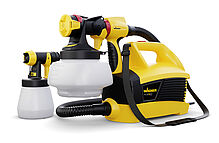
Universal Sprayer W 690 FLEXiO

The universal paint sprayer for indoor and outdoor use

W 690
Tips and tricks with Carina

Tips and tricks with Carina

We have summarised more tips on spraying wood and metal paints for you in our Tips and Tricks with Carina.

Apply glazes and lacquers correctly
Why spraying is better!

Why spraying is better!

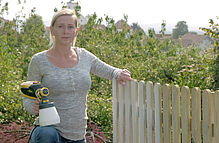
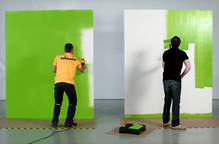
With a paint sprayer, it’s incredibly easy to apply the material evenly and to cover the entire surface. The end result is a smooth and even layer of paint.

Why it's better to spray