Instruction guide for flower pots made from car tyres
Under the motto "from old to new", used car tyres are converted into decorative flower pots in these instructions.


Get the materials from the material list. If you don't have any old car tyres at home, you can get them free from your local scrap yard or tyre fitter in your area.
Clean the tyre. It should be dust-free and dry.
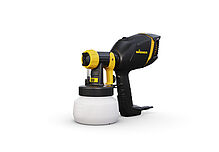
The sprayer is ready for use in just a few steps. Fill the paint container up to 3/4 full with paint and thin it following the manufacturer’s instructions. To do this, use the included stirrer, each notch corresponding to a 10% dilution. The suction tube can be aligned depending on how you are going to work. Downwards when spraying objects overhead and forwards when spraying downwards. The spray jet can also be adjusted three ways — horizontally, vertically and diagonally (for detailed work). Carry out a test spray to find the right settings for you.
The sprayer is ready for use in just a few steps. Fill the paint container up to 3/4 full with paint and thin it following the manufacturer’s instructions. To do this, use the included stirrer, each notch corresponding to a 10% dilution. The suction tube can be aligned depending on how you are going to work. Downwards when spraying objects overhead and forwards when spraying downwards. The spray jet can also be adjusted three ways — horizontally, vertically and diagonally (for detailed work). Carry out a test spray to find the right settings for you.
Hold the sprayer perpendicular to the object and apply a uniform spray coverage.
The amount of paint can also be adjusted with the rotary knob on the trigger. Only change the direction of spray when the sprayer is past the object. This avoids a build-up of thicker layers of paint during direction changes. Maintain a constant distance of 5 – 15 cm from the object.
Tip:If paint is applied too thickly, drips can form, so it's better to spray two thin coats rather than one thick coat. After spraying, allow the paint to dry in accordance with the manufacturer's instructions.
Hold the sprayer perpendicular to the object and apply a uniform spray coverage.
The amount of paint can also be adjusted with the rotary knob on the trigger. Only change the direction of spray when the sprayer is past the object. This avoids a build-up of thicker layers of paint during direction changes. Maintain a constant distance of 5 – 15 cm from the object.
Tip:If paint is applied too thickly, drips can form, so it's better to spray two thin coats rather than one thick coat. After spraying, allow the paint to dry in accordance with the manufacturer's instructions.

With HVLP paint sprayers you have a clear time advantage compared to brushes and rollers.
To the explanation