Instructions for spraying with chalk paint
Turn your old dresser into a new piece of art. These instructions explain how to spray with trendy chalk colours.


Find a piece of furniture that is in "good condition". Seal off any holes or cracks with filler. Sand the furniture down lightly and ensure that it is free from dust and grease.
Choose your preferred colour concept. A sketch can help you find the perfect colour combination.
Choose your preferred colour concept. A sketch can help you find the perfect colour combination.
Stir your preferred paint colour well and pour it into the spray attachment. To familiarise yourself with the unit's settings, we recommend carrying out a test spray on a piece of cardboard. If the volume of material is too low or the atomisation is not fi ne enough, you can dilute the chalk paint by up to 20%.
Start at the outer edges and always change the direction of spray when the spray is not on the object. This avoids a build-up of thicker layers of paint during direction changes. Maintain a constant distance of around 5-15 cm from the object.
Tip: since chalk paint applied too thickly can cause drips, it's better to spray two thin coats than one thick coat. Then allow the chalk paint to dry in accordance with the manufacturer's instructions.
Once the chalk paint is completely dry, a coat of varnish can be applied to seal it. The spraying process is the same as for the chalk paint.
Start at the outer edges and always change the direction of spray when the spray is not on the object. This avoids a build-up of thicker layers of paint during direction changes. Maintain a constant distance of around 5-15 cm from the object.
Tip: since chalk paint applied too thickly can cause drips, it's better to spray two thin coats than one thick coat. Then allow the chalk paint to dry in accordance with the manufacturer's instructions.
Once the chalk paint is completely dry, a coat of varnish can be applied to seal it. The spraying process is the same as for the chalk paint.
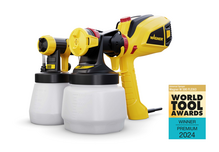
The compact hand-held paint sprayer for interior and exterior use
W 590 FLEXiO
With HVLP paint sprayers you have a clear time advantage compared to brushes and rollers.
To the explanation